
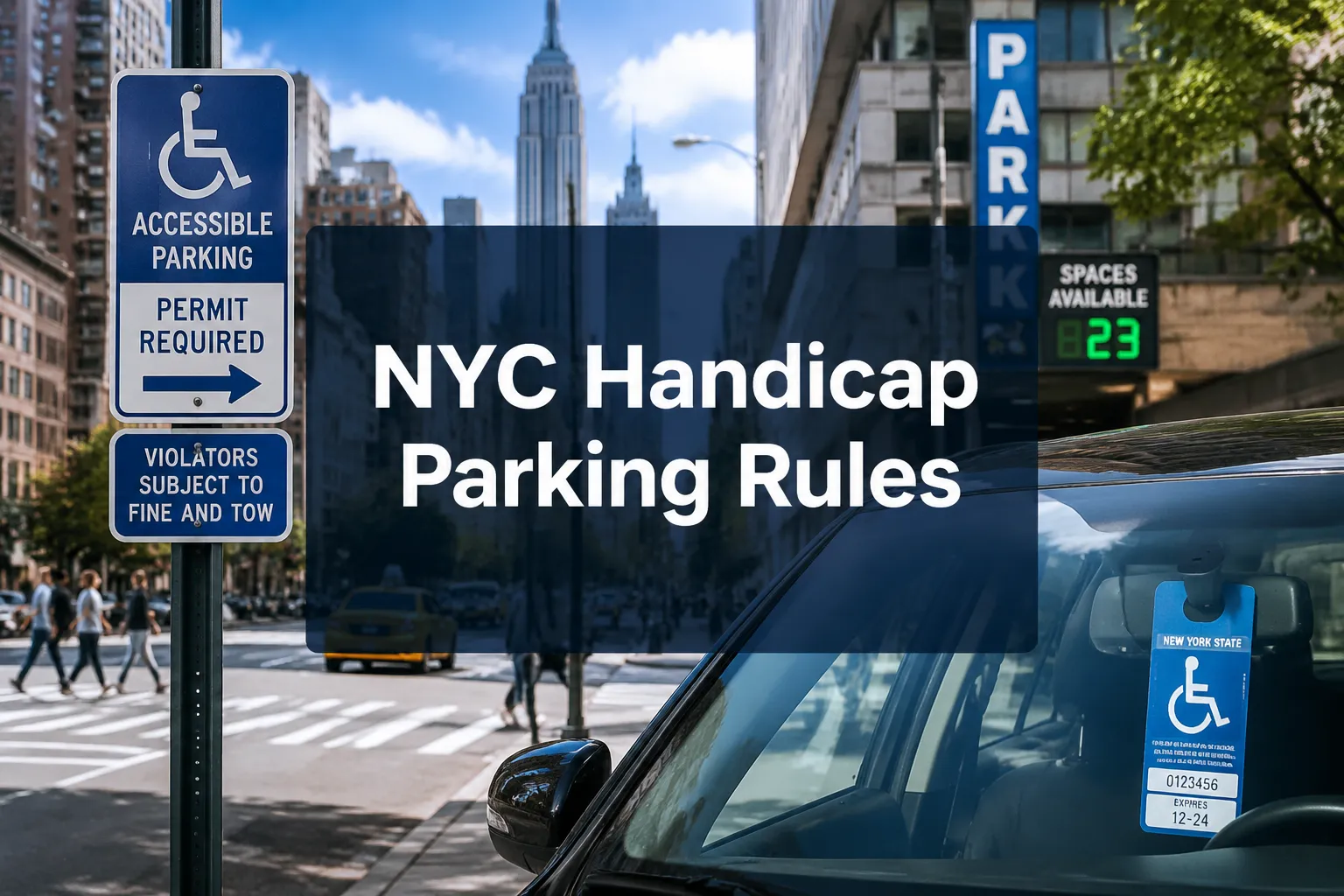
New York City issued over 143,000 disability parking permits in 2025, yet thousands of drivers still receive citations each month for misunderstanding the complex dual-permit system. The confusion stems from a critical distinction: NYC operates two separate disability parking programs with completely different rules about where you can legally park.
Understanding NYC handicap parking rules is essential for disabled drivers, caregivers, and anyone transporting someone with mobility limitations. The city’s unique regulatory framework differs significantly from the rest of New York State, and violations carry steep financial penalties plus the risk of towing.
Key Takeaways
- NYC requires a specific dashboard permit (NYC PPPD) for on-street parking privileges; the New York State blue hang tag works only in off-street lots within city limits
- The NYC PPPD allows free parking at meters and in most «No Parking» zones, but never in «No Stopping» areas, bus stops, crosswalks, or within 15 feet of fire hydrants
- Both permits require the disabled person to be present in the vehicle when using accessible parking privileges
- Violations for illegal use of disability parking spaces range from $50-$150, with higher penalties for repeat offenses
- The State blue hang tag now remains valid for up to five years, reducing renewal frequency for many permit holders
Understanding NYC’s Dual Disability Parking Permit System
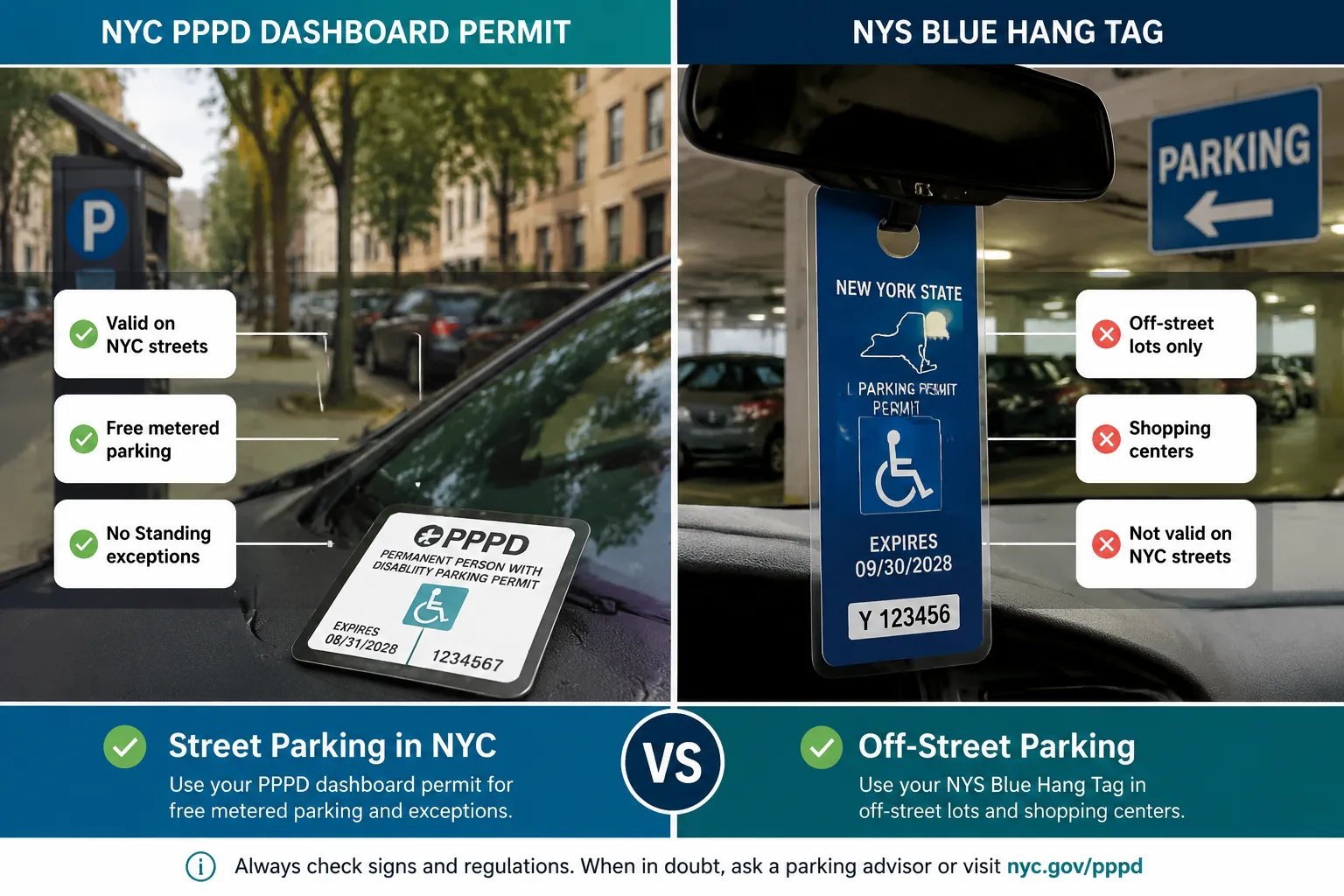
New York City operates a unique two-tier system that confuses even longtime residents. The NYC Parking Permit for People with Disabilities (PPPD) is a rectangular dashboard card that grants on-street parking privileges throughout the five boroughs.[1][4] This permit is issued exclusively by NYC DOT and is valid only within city limits.
The New York State blue hang tag serves a completely different purpose. This placard, issued by the NYS DMV, allows parking in designated accessible spaces at off-street facilities, shopping malls, office buildings, apartment complexes, and university campuses.[2][3] Within NYC, the State hang tag cannot be used for on-street parking at meters or in street-cleaning zones.
This dual system exists because NYC does not designate reserved handicapped spaces on public streets. The city reserves signed accessible parking exclusively for off-street lots and garages.[2][8] For curbside parking, disabled drivers must use the NYC PPPD and follow specific regulations about where that permit grants privileges.
Both permits require proof of a permanent disability that seriously impairs mobility. Non-drivers, including children with qualifying disabilities, can receive permits that allow their caregivers to use parking privileges when transporting them.[3][6]
Check the NYC Parking Directory to locate accessible off-street parking facilities across all five boroughs.
Where the NYC PPPD Allows You to Park
The NYC dashboard permit grants specific on-street parking privileges that override many standard restrictions. Permit holders can park for free at any metered passenger or commercial space without time limits (unless a shorter time is posted on the specific meter).[1][15]
The permit also allows parking in most «No Parking» zones, including areas marked with street-cleaning «broom» signs during Alternate Side Parking suspension periods. This exemption helps disabled drivers avoid the constant vehicle shuffling required by NYC’s street-cleaning schedule.[1][2]
Additionally, NYC PPPD holders may park in many «Authorized Vehicles Only» spaces, such as those designated for diplomats, press vehicles, and government agency cars, subject to any posted time restrictions.[1][15]
Critical Restrictions That Still Apply
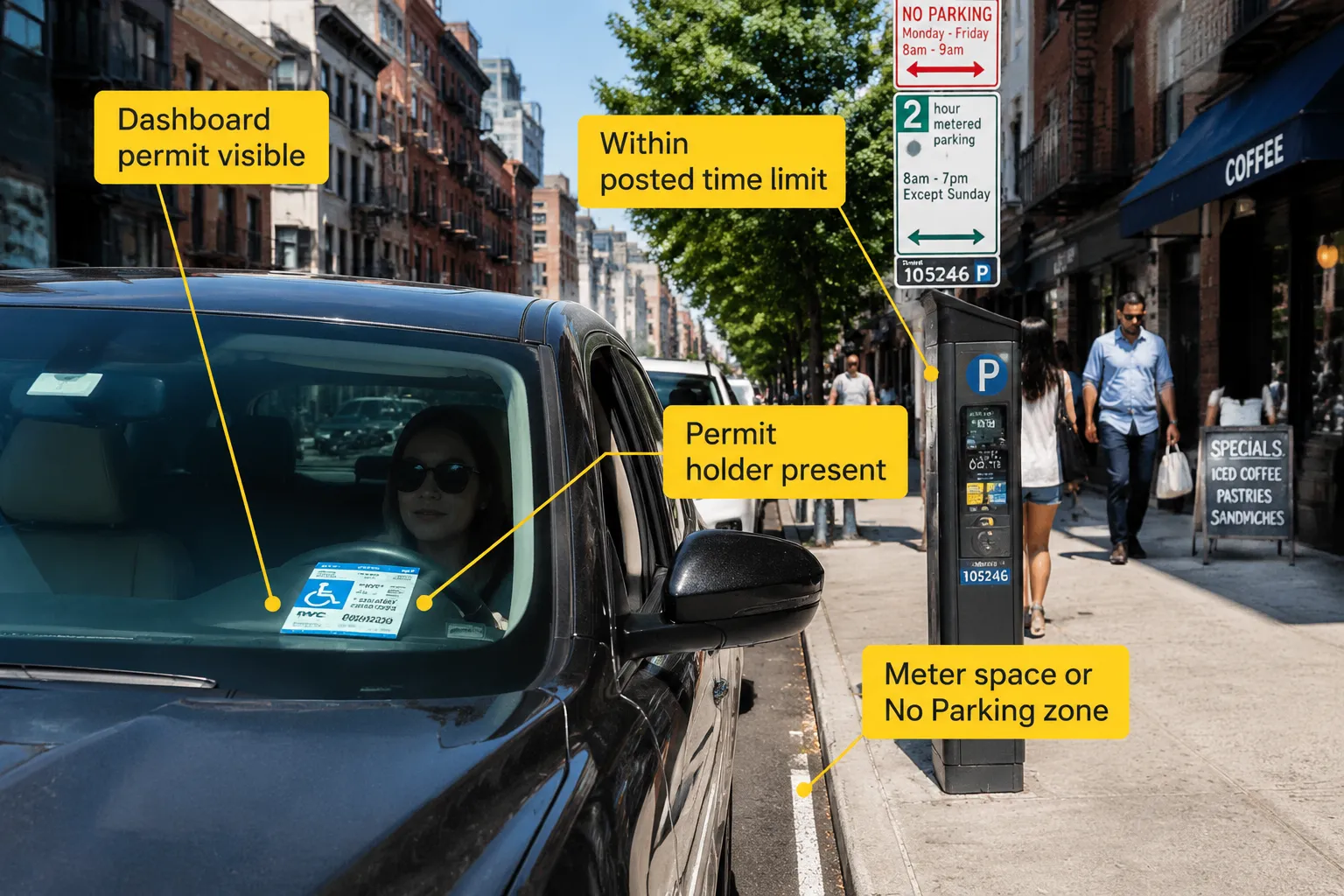
Even with a valid NYC PPPD, parking remains strictly prohibited in:[1][5][15]
- «No Stopping» zones at any time
- Most «No Standing» zones (except specific authorized-vehicle or truck-loading areas with explicit exemptions)
- Hotel loading zones
- Bus stops and bus lanes
- Crosswalks and pedestrian ramps
- Driveways and building entrances
- Within 15 feet of fire hydrants
- Double-parked positions or blocking traffic lanes
These restrictions exist for public safety and traffic flow. Violations in these zones will result in tickets and potential towing, regardless of permit status.
The NYC PPPD does not exempt holders from moving their vehicles during posted street-cleaning hours unless Alternate Side Parking has been officially suspended. Always verify the Real-Time Status of ASP rules before leaving your vehicle in a broom-sign zone.
For accessible parking options in the Bronx, explore facilities like Sherman Parking and Parking in Bronx, NYC garages that offer designated accessible spaces.
NYC Handicap Parking Rules: Eligibility & Application Process
Eligibility for the NYC PPPD is limited to individuals with permanent disabilities that seriously impair mobility to the point where private automobile use is medically necessary.[3][4] Temporary conditions typically do not qualify.
The application requires certification from a licensed physician, physician assistant, or nurse practitioner who can attest to the severity and permanence of the mobility impairment. The medical professional must complete specific sections of the application form documenting the disability.[4][6]
Applications are submitted directly to NYC DOT through their dedicated parking permits portal at parkingpermits.nyc.gov. The department maintains specialized customer service staff to assist with applications, renewals, and resolving issues related to summonses or permit misuse investigations.[4][9]
Processing times vary, but applicants should allow several weeks for review and permit issuance. The NYC PPPD must be renewed periodically, with the specific renewal cycle depending on the nature of the disability certification.
For the State blue hang tag, applications go through the NYS DMV using form MV-664.1. As of August 2026, these placards remain valid for up to five years from the date of issue, significantly reducing the administrative burden of frequent renewals.[12]
Find convenient Parking in Manhattan, NYC locations and Parking in Queens, NYC facilities with accessible spaces for State permit holders.
Enforcement, Violations & Penalties Under NYC Handicap Parking Rules
New York State law makes it a violation to stop, stand, or park in any area designated as handicapped parking without a valid disability permit or plates.[2][7] The law further requires that the person to whom the permit or plates were issued must be present in the vehicle when using reserved accessible spaces.
This «presence requirement» is strictly enforced. Family members cannot use a relative’s disability permit when the disabled person is not in the vehicle. Doing so constitutes permit misuse and can result in permit revocation plus financial penalties.[6][15]
Penalties for illegally parking in spaces reserved for people with disabilities typically range from $50-$75 for a first offense to $75-$150 for subsequent violations under state and city regulations.[3][5][7] Additional fines and towing fees apply when vehicles block accessible ramps or create safety hazards.
Common Compliance Issues
Recent legal aid resources updated in August 2026 highlight frequent mistakes:[6][15]
- Misuse of permits by family members when the disabled person is absent
- Parking in restricted «No Stopping» or «No Standing» zones despite having a permit
- Confusing the NYC PPPD (valid on streets) with the State hang tag (off-street only in NYC)
- Failing to display the permit properly or allowing it to expire
If you receive what you believe is an unfair parking citation, document the circumstances immediately with photos showing your permit, the parking signs, and vehicle position. The Parking Education Hub provides resources for disputing Tickets & Disputes through NYC’s adjudication process.
Check Parking in Brooklyn, NYC and Parking in Staten Island, NYC for additional accessible parking options across the outer boroughs.
Future Changes: Proposed Statewide Permit Harmonization
A 2025 New York State Assembly bill (A4611) proposes significant changes to disability parking rules. The legislation would clarify that disability parking permits issued by any city, town, or village would entitle vehicles to park in any designated disabled spaces statewide and in certain NYC «authorized parking spaces» referenced in the NYC Charter.[7]
If enacted, this bill could gradually harmonize the currently fragmented rules across NYC and the rest of New York State. The proposal aims to reduce confusion for disabled drivers who travel between jurisdictions and simplify enforcement for municipal agencies.
As of 2026, the bill remains under legislative review. Disabled drivers should monitor official NYC DOT and NYS DMV channels for updates on any regulatory changes that might affect permit validity or parking privileges.
Conclusion
Navigating NYC handicap parking rules requires understanding the critical distinction between the NYC PPPD dashboard permit for on-street parking and the New York State blue hang tag for off-street facilities. The NYC permit grants valuable exemptions from metered parking and many «No Parking» zones, but never overrides «No Stopping» restrictions, bus stops, or fire hydrant clearances.
Take these steps now:
- Verify which permit type you currently hold and where it’s valid
- Check the Real-Time Status of Alternate Side Parking before leaving your vehicle in street-cleaning zones
- Ensure the disabled person is present whenever using accessible parking privileges
- Explore off-street parking options through the NYC Parking Directory to avoid fines and towing
- Document your permit and parking circumstances if you receive a citation you believe is unfair
Understanding these regulations protects you from costly violations while ensuring accessible parking resources remain available for those who genuinely need them. Stay informed about suspension calendars and municipal updates to avoid fines and towing throughout 2026.